
It might not seem like a big deal, just a few messy drawers or a closet that’s gotten a little out of hand, but clutter has a way of costing more than we expect.
Over time, disorganization quietly drains money, time, and energy in ways that add up far more than most people realize.
Here are a few examples of the financial toll that disorganization can take on a home or office.

1. You End Up Buying What You Already Own
When items don’t have a clear, visible home, they might as well have disappeared. That’s when we hear:
“I thought we were out of batteries.”
“I forgot I already had one of these.”
“I’ll just order another to be safe.”
Duplicate purchases are rarely intentional. They happen because systems make it hard to see what you own. Clear categories, visible storage, and basic inventories help prevent this kind of quiet overspending.
2. You Pay to Store Things You Don’t Use
Storage costs money, whether it’s a monthly storage unit or square footage in your own home that’s no longer usable.
When spaces are filled with items you don’t use or need, you’re paying to keep them, sometimes without realizing it.
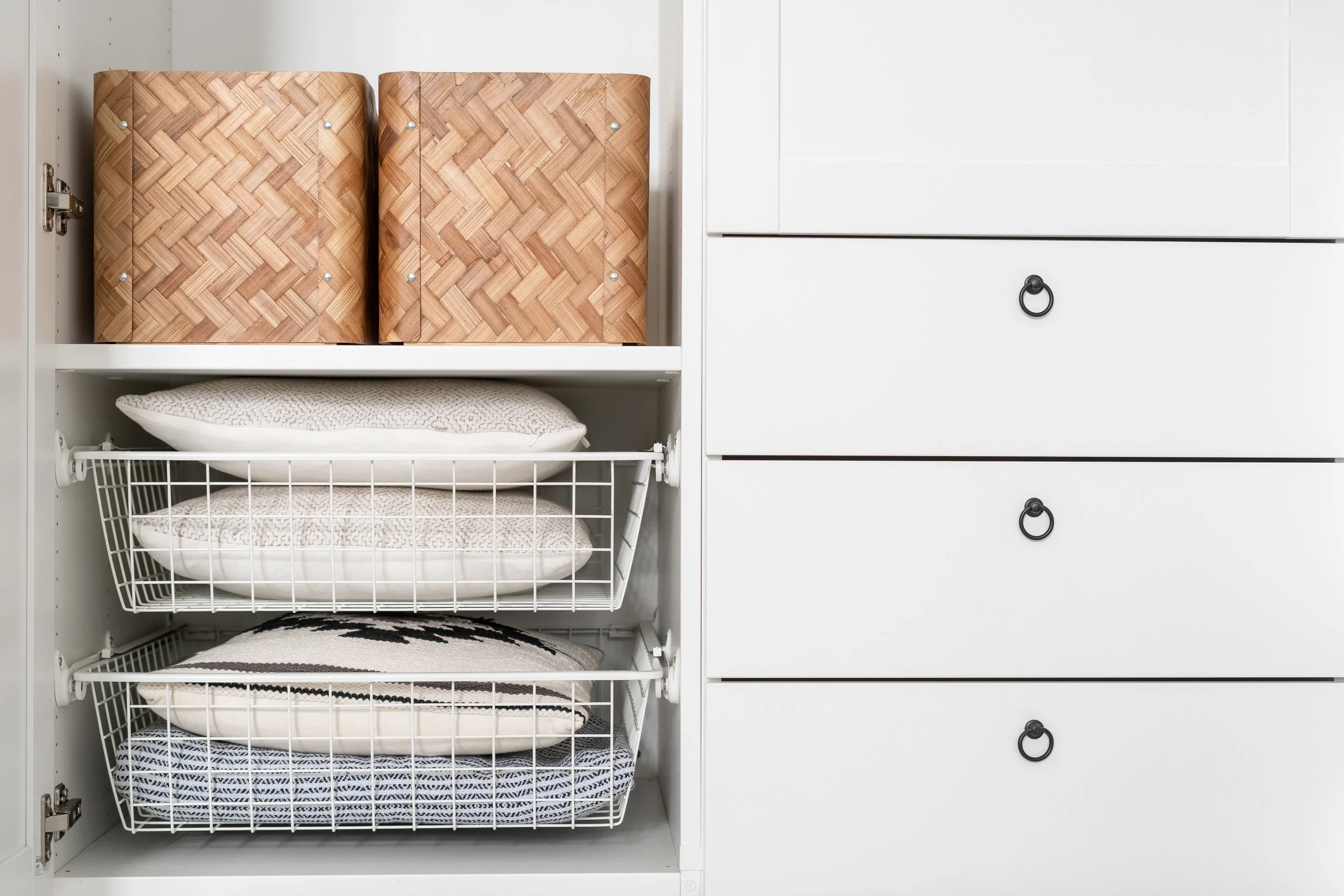
Editing what you store and being intentional about what earns its space can free up both room and resources.
3. Items Lose Value When They’re Buried
Over time, certain items tend to pile up such as outdated gear, appliances that go unused, or clothing that no longer fits your life.
When items are buried in clutter, they’re easy to forget. And forgotten items often lose resale value, usefulness, or relevance before you get the chance to make a decision about them.
Visible, accessible systems make it easier to sell, donate, or repurpose items while they still have value.
4. Disorganization Creates Missed Deadlines and Extra Fees
Disorganization goes beyond physical clutter. It can show up in paperwork, digital files, and the small tasks that are easy to lose track of.
Misplaced documents, forgotten subscriptions, missed returns, and unpaid bills often stem from systems that are unclear or hard to maintain. Simple, centralized systems reduce these costly oversights.

Simple, centralized systems reduce these costly oversights.
5. Time and Energy Add Up Too
Time spent searching, re-buying, reorganizing, or feeling overwhelmed has a real cost.
When your space is easier to navigate, daily decisions take less effort. That clarity supports calmer routines and more intentional spending, both inside and outside the home.
How to Save Money by Getting Organized
You don’t need to overhaul everything to see benefits. Small shifts make a difference.
Shop your home first: Take inventory before buying something new.
Track what you own: Even a simple list can prevent duplicates.
Create accessible systems: If it’s easy to see and reach, it’s easy to use.
Audit your storage: Notice what’s costing you space or money without adding value.
Edit with intention: Letting go of the right items creates room, and sometimes cash flow.
Organization Is About Clarity, Not Minimalism
Clutter can quietly drain resources, but it doesn’t have to.
With the right systems in place, it becomes easier to manage what you have, keep track of it, and use it well.
Streamlining belongings and maintaining simple, functional systems is at the core of the work we do. We’re here to help your space run more smoothly while saving time, money, and energy over the long term.